
French bakery windows had been tempting Daniel since his first morning in Paris. Yet for three weeks, he had walked past the one on his street.
Today, he stopped outside.
“Une baguette, s’il vous plaît.”
He whispered it once more. Six words. Surely six words would be enough.
Since moving for his partner’s job, Daniel had missed feeling capable. Back home, he organised meetings, made people laugh and knew exactly where to buy good coffee. Here, he sometimes handed over his phone instead of asking a question.
This morning, he wanted to bring home breakfast, and something to tell.
He pushed open the door.
1. Start your French bakery visit with “Bonjour”
“Bonjour, monsieur !”
Daniel answered, then delivered his carefully rehearsed order. For a second, everything went exactly as planned.
Then the person behind the counter asked a question.
Daniel’s smile stayed in place. His understanding disappeared.
At a French bakery, begin with “Bonjour”, followed by your order and “s’il vous plaît”. This familiar opening helps you ease into the exchange. Leaving with “Merci, bonne journée !” gives you a useful ending, too.
2. Understand baguette vs tradition
“Classique ou tradition ?”
Two rows of bread. Two choices. Someone joined the queue behind him.
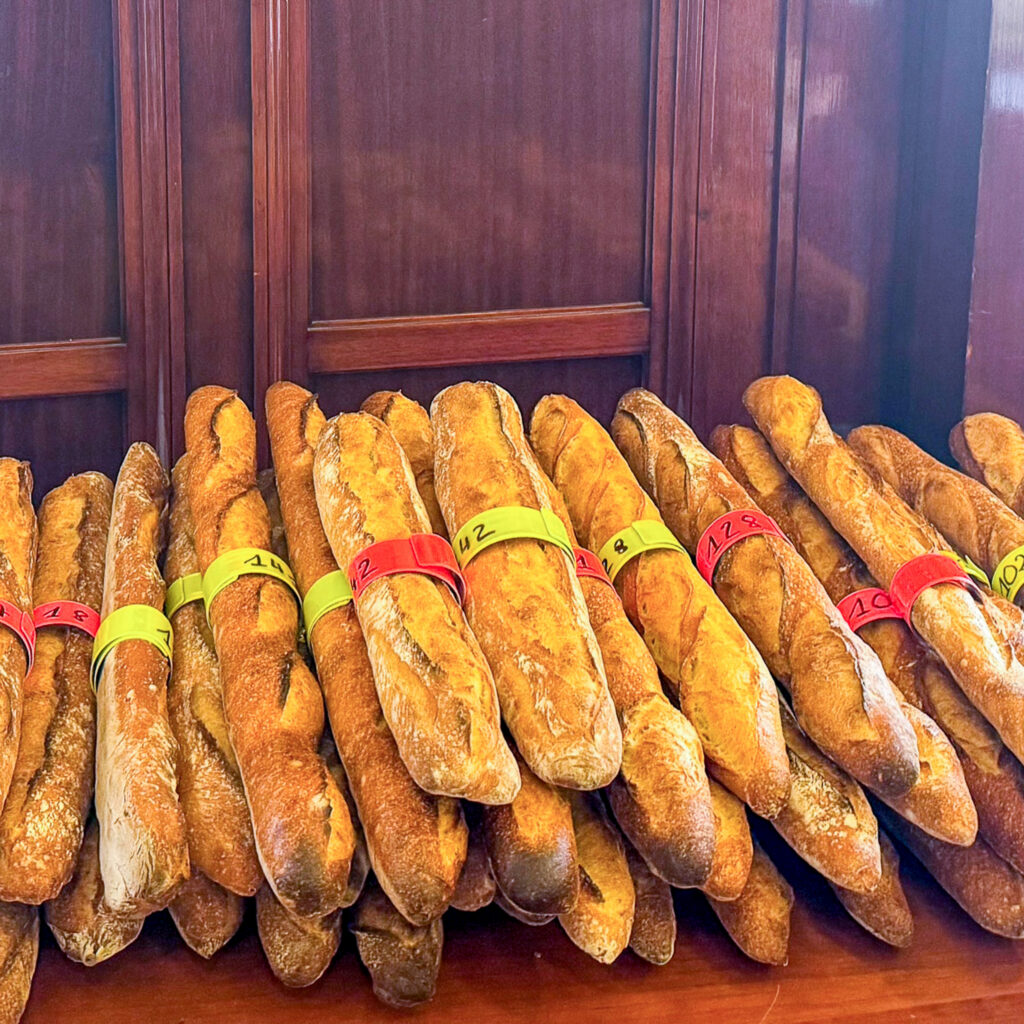
In a French bakery, “baguette” describes a long, narrow loaf. A tradition can have the same shape, while following specific rules for its ingredients and preparation.
The designation “pain de tradition française” excludes additives and deep-freezing during production. The dough uses wheat flour, water, salt, and yeast and/or sourdough starter, with limited amounts of certain additional flours permitted. The
official French bread decree
explains these requirements.
“Une tradition, s’il vous plaît,” Daniel answered.
He relaxed his shoulders. Then came another question.
3. Choose your crust: “Bien cuite” or “Pas trop cuite”
“Bien cuite ?”
This time, the person serving him held up a darker loaf, then pointed towards a paler one. Daniel began to understand.
At the French bakery counter, “bien cuite” means well baked, with a darker crust. “Pas trop cuite” asks for a lighter bake, depending on the loaves available.
“Une tradition pas trop cuite, s’il vous plaît.”
One traditional baguette, lightly baked, please.
Daniel glanced behind him. The next customer was looking at their phone. Nobody was keeping score.
4. Recognise “Et avec ceci ?”
The bread slipped into a paper sleeve. Daniel reached for his wallet.
“Et avec ceci ?”
Another question. Was something wrong with his order?
On your next French bakery visit, listen for this expression. It simply means “Anything else?”
To finish, say “Ce sera tout, merci”—that will be all, thank you. To add something, try “Et deux croissants, s’il vous plaît.”
Daniel considered the croissants. Saturday, he decided. He would come back on Saturday.
5. Have a sentence ready when you need help
Finally, the price. Daniel heard the numbers, but they arrived too quickly.
He could hold out his card and hope. Instead, he tried the sentence saved on his phone.
“Vous pouvez répéter plus lentement, s’il vous plaît ?”
Could you repeat more slowly, please?
The amount came again. This time, he understood.
A French bakery conversation gives you a chance to practise asking for help. For more everyday expressions, explore our
French phrases for expats,
including useful language for summer situations.
6. Let curiosity lead your next French bakery visit
As Daniel paid, he noticed a round loaf covered in seeds. He almost asked about it. Almost.
Next time, he could try “Qu’est-ce que vous me conseillez ?”—what do you recommend?
There is plenty to discover beyond the vocabulary. In 2022, UNESCO inscribed the
artisanal know-how and culture of baguette bread
on its Representative List of the Intangible Cultural Heritage of Humanity, recognising both craftsmanship and the social practices surrounding this everyday bread.
7. Bring home something to tell
Outside the French bakery, Daniel realised he was still gripping his bag with both hands.
He loosened his fingers, broke off a piece of bread and sent his partner a message.
“Bought breakfast. In French. There were follow-up questions.”
“I want the full story tonight,” came the reply.
For once, he already knew what he would say about his day.
At Absolutely French, everyday discoveries offer opportunities to practise the language and explore the culture. Once you have chosen your bread, our guide to
essential French table manners
can help you prepare for another everyday adventure: sharing a meal.
Before your next French bakery visit, save one phrase from this guide. If an unexpected question comes, you already know how to ask them to say it again.
Absolutely French – Who We Are – Companies Services
Absolutely French is the first French language school entirely dedicated to expat partners and expatriates.
Our mission:
To support dual careers in expat families by helping partners integrate quickly and confidently into French life.
Our method:
Fun, friendly, and innovative French courses that guarantee results — and help build a local network.
 Looking for French classes tailored for expat partners?
 Email:
 Phone:
 Address: 4, rue Faraday, 75017 Paris